

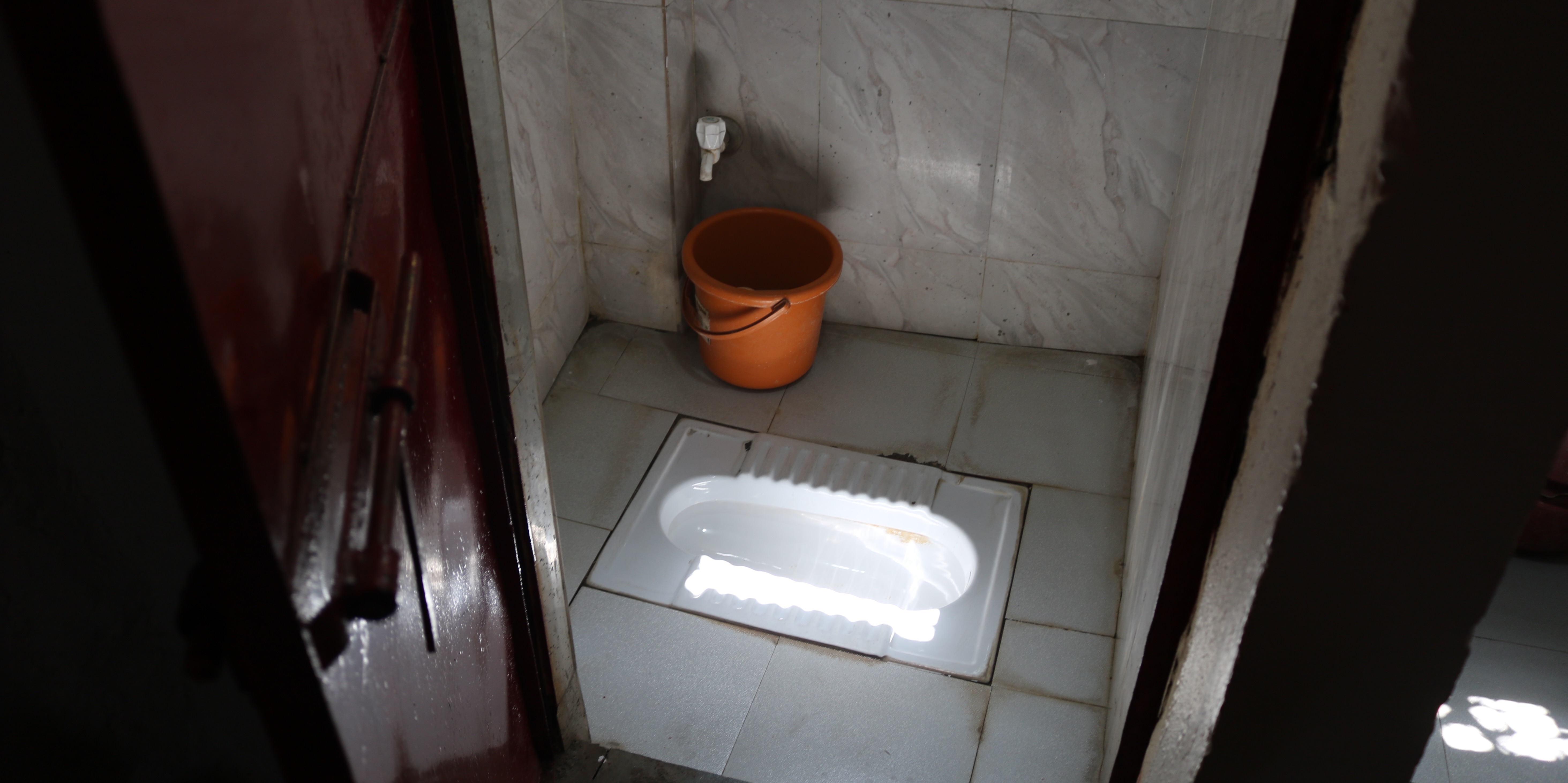
That particular day, our teacher introduced us to a new pose: Malasana.
Everyone around me dropped down into the pose with ease. I did not. My heels hovered above the ground while I tried to balance myself. My spine was not straight, and I struggled to bring my palms together. What seemed effortless for everyone else, felt very difficult for me. At that moment, I did not make the connection, but my teacher explained why the pose seems so natural:
“It’s because this is how people use the toilet in many parts of India,” she said.
Of course, I thought. It made perfect sense. And yet, this was the first time I connected an everyday sanitation practice with a yoga pose. In that one class, I ended up learning more about the health benefits of squatting than I ever had before. Somehow, throughout my studies and my work, I had never been part of a conversation about the endless benefits of squatting.
What does Malasana mean?
Malasana is a Sanskrit word that describes the pose itself. Asana translates to seat or posture, while the meaning of mala changes depending on its pronunciation. With a short “a,” mala translates to excrement, whereas a long “a” means garland or a necklace of beads. Today, the pose is now most commonly known as the Garland Pose, with interpretations describing that the arms wrap around the legs like a garland. However, the original translation, while maybe less poetic, remains the best way of describing what the posture intends to do. It is a deep squatting position which allows your body to stimulate digestion.
When looking deeper into it, I realized that there are a studies which looked at how the toilet posture is related to our health (Rahgoshay, Rahdar and Nikoo et al., 2025). Squatting toilets, while putting weight on knees and calf muscles, are associated with potential benefits for digestive health, such as reduced straining and improved bowel evacuation. On the other hand, sitting toilets, while putting a lot less stress on muscles and joints, can increase the risk of functional constipation. The main difference here is the anorectal angle which can range from 80 to 90 degrees for sitting toilets and from 100 to 110 degrees for squatting toilets.
Of course, looking at it from this perspective only does not paint the full picture. Individual needs, cultural practice as well as environmental factors play a role in how squatting and sitting toilet postures influence our health (Rahgoshay, Rahdar and Nikoo et al., 2025). After that class, I began to notice how often people naturally squat in India, for example while cooking, working or resting. Research has shown that using your lower limb muscles in squatting or assisted squatting postures, requires higher levels of activity than chair sitting (Raichlen et al. 2020). This made me realize that the traditional practice of squatting in India can be a solution I never thought of before when thinking about inactivity being a growing public health risk.
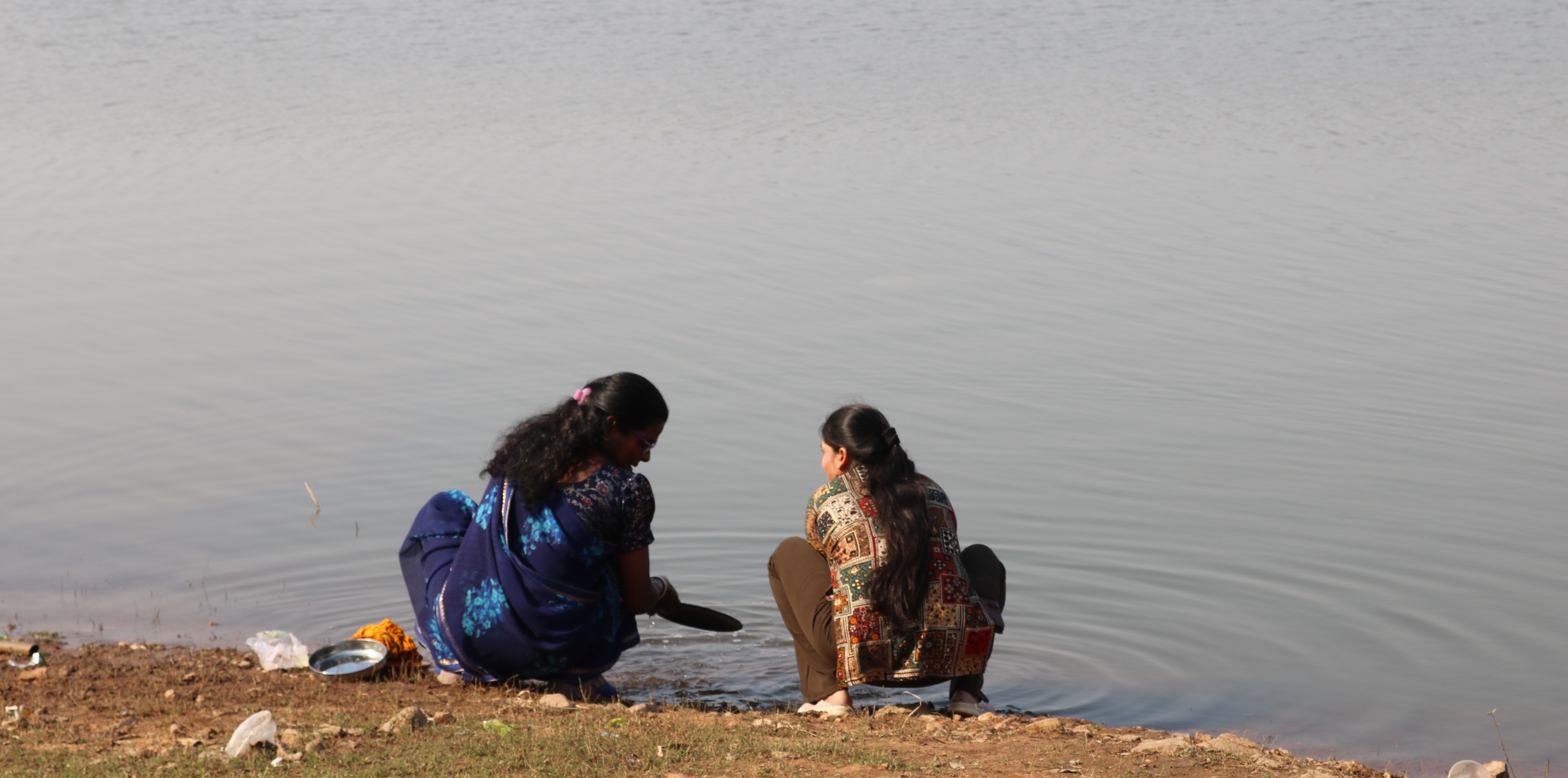
Credit: Isabell Hedke
Sanitation is About (Almost) Everything
In WASH, we often talk about toilets in terms of coverage, access, and infrastructure. My awkward attempts at practicing Malasana have been a small but humbling reminder that sanitation is, first and foremost, not about systems, but about our bodies.
About understanding what feels intuitive, what is practiced, and why.
There is not one approach that is inherently universal. All are shaped by culture, history, and context. Modern sanitation infrastructure assumes a certain way of using the body. This way does not align with practices that are equally common elsewhere. There are also popular approaches that try to combine the benefits of sitting and squatting toilets. Using a footstool has been found to mitigate health risks while improving user comfort compared to a traditional squat position (Rahgoshay, Rahdar and Nikoo et al., 2025). By raising your feet, you quite literally mimic squatting.
For those of us who grew up primarily using sitting toilets, the squatting posture can feel unfamiliar and difficult. It requires flexibility, balance and muscles that our bodies are not used to. In this case, what feels normal or not, is actually something we have learned over time or not. This makes me wonder:
Whose practices are considered the default option for the systems that we want to create?
Should there ever be a “default option” when it comes to sanitation?
Practice Makes Perfect
For the past months, I have been practicing my Malasana. Slowly, but steadily, my body is adapting. My heels are getting closer to the floor and the pose feels more comfortable, even though it is still far from effortless.
Every single time I drop down, not only when using the toilet, but also when practicing yoga or taking a break from sitting – the pose reminds me that understanding sanitation does not have to start with research, projects or policies.
Sometimes, it begins with something as simple as trying to keep your heels on the ground in a yoga class.
Sources:
Rahgoshay, N., Rahdar, M., Nikoo, L., et al. (2025). Sitting vs. squatting: A scoping review of toilet postures and associated health outcomes. BMC Public Health, 25, 2192. https://doi.org/10.1186/s12889-025-23379-8
Raichlen, D. A., Pontzer, H., Zderic, T. W., Harris, J. A., Mabulla, A. Z. P., Hamilton, M. T., & Wood, B. M. (2020). Sitting, squatting, and the evolutionary biology of human inactivity. Proceedings of the National Academy of Sciences of the United States of America, 117(13), 7115–7121. https://doi.org/10.1073/pnas.1911868117
